The Price Gap Is Real, but It Is Not About the Tub
The American jacuzzi suite hotel market spans a roughly three-to-one price range. A traveler searching jacuzzi suite near me in any mid-size city will find listings clustered around $150 at the floor and $350 to $400 at the ceiling, with a murky middle tier scattered between. The obvious assumption is that the expensive tub is a better tub. More jets. Deeper basin. Some proprietary hydrotherapy system that justifies the premium. The assumption is wrong.
The hardware gap between a budget jetted tub and an upscale jacuzzi suite hotel option is narrower than most travelers expect. Both units hold hot water. Both circulate it. Both have a control panel. What separates a $149 room from a $340 room is the set of decisions the property made about everything around the shell: where the tub was placed relative to the room, what the tub was made from, how the space is lit, how much square footage the tub commands, and whether the surrounding finishes were chosen with intention or pulled from a supplier catalog.
These are five markers. They correlate tightly with price, but not perfectly - and the imperfection is where a mid-price property delivers above its tier. Once a traveler can name these five categories, they can read any jacuzzi suite hotel near me result on Feature Stays or anywhere else. They can decode whether the rate reflects the floor plan or just the rack rate.
Placement: Where the Tub Sits Relative to the Room
Placement is the design decision that matters most, and the easiest to read from a listing photo. Was the tub placed inside the bathroom, behind a door, sharing space with the toilet and vanity? Or was it given its own territory within the suite, positioned as the room's focal point rather than its afterthought?
Budget en suite jacuzzi hotels default to tub-in-bathroom because it is the lowest-friction renovation. The plumbing is already there. The drainage is already there. A contractor can swap a standard bathtub for a whirlpool unit in an afternoon without touching the room layout. This is efficient construction, and the result looks like efficient construction: a jetted tub wedged between a toilet and a vanity mirror, visible only when the bathroom door is open.
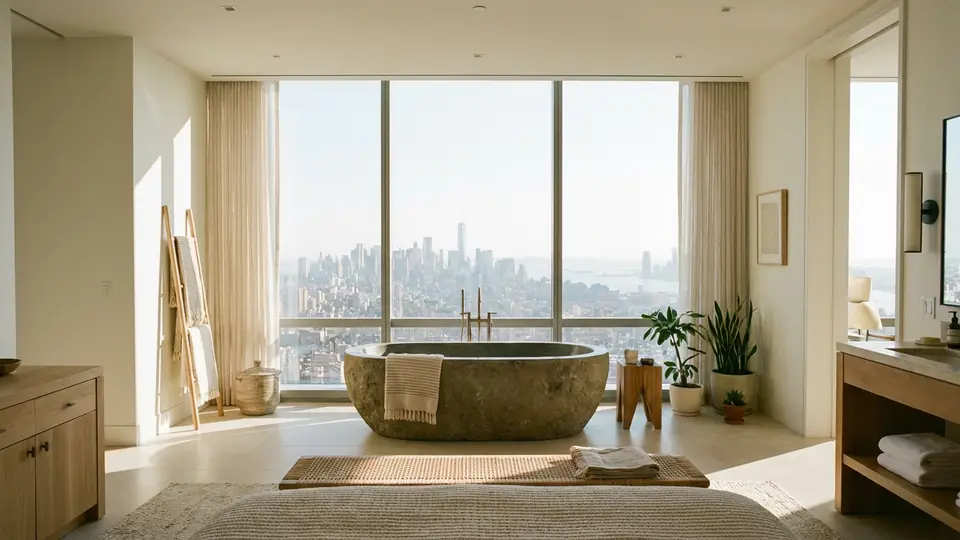
The Reserve at Hot Springs in Arkansas illustrates the alternative. Its freestanding oval tub sits in the bedroom itself, positioned as the room's architectural anchor alongside a fireplace and wood-finished walls. At $340 per night with a perfect 5.0 rating across 599 reviews, The Reserve prices its rooms to reflect a floor plan that was drawn around the tub rather than amended to include one. A tub in a bathroom is something a guest uses. A tub in a bedroom is something the room was designed for. The difference shows up in every listing photo, and it is the first thing an informed traveler should look for.

Compare that to The Inn and Spa at Intercourse Village in Pennsylvania, where the heart-shaped jetted tub sits inside the room at $149 per night. The placement decision is technically similar, but guest reviews note small rooms and tight bathrooms. Placement alone does not guarantee the experience. It is the necessary first marker, not the sufficient one.
Across the six properties examined, ratings range from 4.9 to 5.0 regardless of whether the nightly rate is $149 or $340, which confirms that guest satisfaction at every price tier depends on execution relative to expectation, not on absolute luxury.
Material: Acrylic Tells You What You Need to Know
Budget hot tub suites use injection-molded acrylic shells. The material is light, inexpensive to manufacture, and produces a distinctive look: thin edges, a high-gloss sheen that photographs well but feels hollow to the touch, and visible flex if anyone leans against the rim. When the jets are running, there is a resonant, almost plastic vibration that announces the material with every cycle.
Upscale properties invest in cast stone, enameled cast iron, or solid-surface composites. These materials are heavier, more thermally stable, and acoustically damped. They retain heat longer, which means fewer refill cycles during a long soak. In listing photos, the tells are the edge profile and the drain hardware. Acrylic tubs have thin, uniform edges and chrome-plated plastic drains. Composite or stone tubs have thicker, sometimes sculpted edges and metal drain assemblies that photograph with visible weight.
The Reserve at Hot Springs runs a freestanding modern tub with the kind of thick-rimmed, matte-finish profile that signals composite or solid-surface construction. The drain hardware in its listing photos is not the snap-in chrome variety found in budget renovations. A guest who spends forty-five minutes in an acrylic shell and forty-five minutes in a composite one will not need anyone to explain the difference. The composite holds its temperature. The acrylic asks for more hot water.
Lighting: The Difference Between a Soak and a Medical Exam
Lighting shapes the soaking experience more than any other marker and is the one most neglected at the budget tier. A $150 suite with jacuzzi in room typically uses whatever overhead fixture the bathroom already had - the same bright, flat, vanity-grade lighting that exists to illuminate a face for shaving. The result is a tub experience lit like a clinical examination. Every surface is evenly exposed.
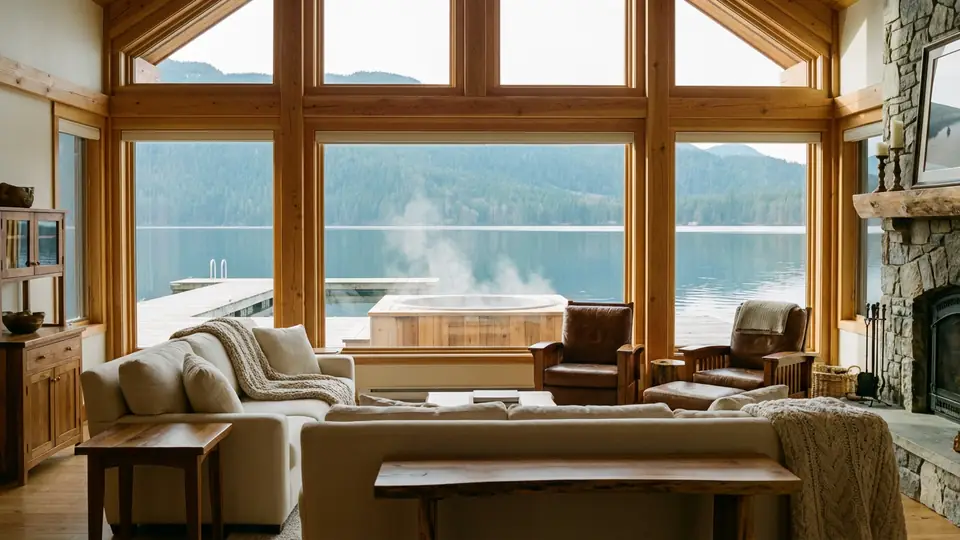
Luxury suites introduce lighting layers: wall sconces on dimmers, candle ledges built into the tub surround, backlit niches, or indirect cove lighting that washes the ceiling without exposing the source. The Redwood cabin in Ruidoso, New Mexico, takes this further by placing its outdoor hot tub on a deck surrounded by pines, where the lighting is largely ambient and natural. At $215 per night with a 4.9 rating across 348 reviews, the Redwood lets the setting do what artificial lighting attempts to replicate: create a visual environment where the soak feels protected and private without feeling enclosed.
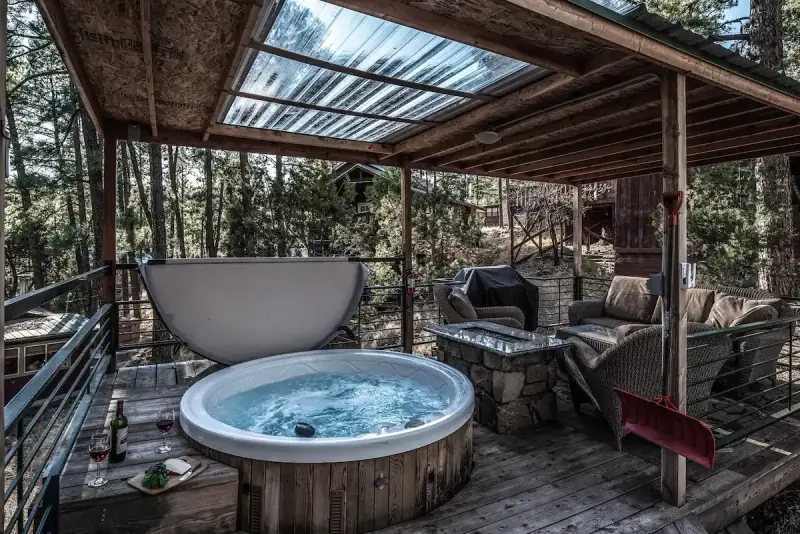
In listing photos, this marker is the easiest to read. If the tub photo shows a bright overhead light reflected in the water surface, the property did not think about soaking as distinct from shaving. If the photo shows layered, warm-toned light with visible dimmers or secondary fixtures, someone made a deliberate decision about atmosphere. That decision costs very little relative to the nightly rate, which is why its absence at the budget tier is more revealing than its presence at the luxury tier.
Spatial Ratio: How Much Room the Tub Gets to Breathe
In a budget suite, the in-room hot tub occupies a corner of a standard bathroom or bedroom, commanding perhaps fifteen percent of the room's total square footage. The tub is present but spatially subordinate. The bed, the desk, the entertainment console all claim their usual territory, and the tub fits wherever remains.
In a well-designed suite, the tub zone commands thirty to forty percent of the living space. There is room to set a glass down. There is room to lay a towel flat. There is room for the act of soaking to feel like the room's primary purpose rather than its supplementary feature.
Queen Anne Urban Bed and Breakfast in Denver demonstrates how spatial generosity compensates for other choices. At $239 per night with a 4.9 rating across 488 reviews, the Queen Anne places its hot tub on a private balcony with floor-to-ceiling windows in select rooms, borrowing the outdoor space to expand the tub's visual territory beyond the room's interior walls. Guest reviews praise the jetted tubs and historic charm, though some note maintenance issues and dated decor. The property trades finishing-detail polish for generous spatial proportion, and the trade works. A tub with room to breathe, even surrounded by imperfect finishes, delivers a better experience than a tub with perfect finishes crammed into a bathroom corner.
At $340 per night with a perfect 5.0 rating across 599 reviews, The Reserve at Hot Springs prices its rooms to reflect a floor plan that was drawn around the tub rather than amended to include one.
Finishing Details: Faucets, Tile, and the Small Things That Add Up
Faucet finish, tile work, towel placement, and tub-side surfaces cost the least to get right and reveal the most about a property's intentions. Budget suites default to chrome fixtures, fiberglass or acrylic surrounds, and towel bars positioned for the bathroom rather than the tub. The towels are across the room. The soap is on the vanity. The guest must get out of the tub to reach anything, which means the soak is constantly interrupted by a layout that ignores the tub's purpose.
Luxury suites install brushed brass, matte black, or oil-rubbed bronze fixtures. The tub surround is natural stone, porcelain tile, or at minimum a solid-surface material that reads as deliberate. There is a ledge or shelf within arm's reach, sized for a glass, a book, a candle. Towels are staged at the tub, not across the room. These choices represent the last $50 to $100 of the nightly rate, and they reveal whether the spa tub was a design decision or a marketing decision.
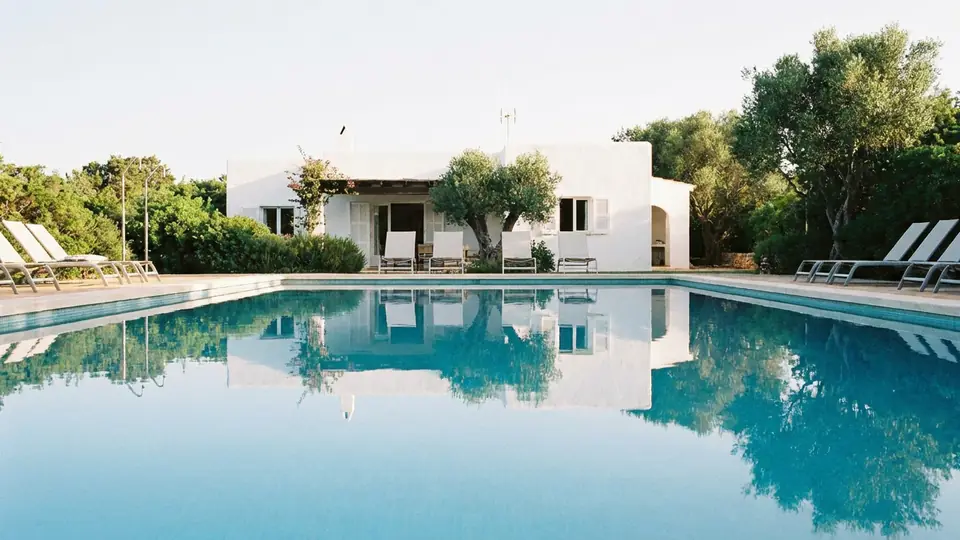
S Estancia Suites in Menorca offers an instructive case. At approximately $168 per night with a 4.9 rating across 436 reviews, the property earns praise for modern finishes, spotless cleanliness, and superb facilities. The private balcony hot tub is surrounded by details that signal intentional design at a moderate price point - proof that good decisions are not reserved for the luxury tier.

When the Budget Tub Is the Right Call
A one-night road-trip stop between cities does not need the tub to be the room's centerpiece. A traveler needs hot water, functional jets, and a clean surface. For that purpose, a $149 jetted tub at a well-maintained property like The Inn and Spa at Intercourse Village is adequate. The tub works. The guest soaks for thirty minutes, sleeps, and drives on in the morning.
The same applies to post-flight recovery stays, late check-ins, and any scenario where the tub is medicinal rather than experiential. Paying an extra $100 to $200 for superior placement and finishing details is paying for an experience the guest will not have time or energy to appreciate. The mistake is booking a $150 tub for a weekend anniversary trip and expecting the room to feel like a retreat.
The Verdict: Pay for the Room, Not the Tub
The price gap does not live in the engineering. Both a $150 suite and a $400 suite have jets, hot water, and a control panel. The gap lives in the architecture around the tub: where it was placed, what it was made from, how it was lit, how much space it was given, and whether someone chose the faucets with the same care they chose the tub itself.
Across the six properties examined here, ratings range from 4.9 to 5.0 regardless of whether the nightly rate is $149 or $340, which confirms that guest satisfaction at every price tier depends on execution relative to expectation, not on absolute luxury. The best soaks per dollar cluster between $180 and $250, where properties like the Redwood in Ruidoso ($215) and S Estancia in Menorca ($168) deliver two or three markers at rates that undercut properties charging fifty to a hundred dollars more for a single marker and builder-grade tile. Any hotels with en suite jacuzzi scoring four or five markers is worth the premium. A property scoring one or two, regardless of its nightly rate, is selling a bathroom renovation with a markup.
Travelers who understand this distinction will make better decisions every time they search jacuzzi suite near me and open a listing page. The five markers - placement, material, lighting, spatial ratio, finishing details - are visible in every photo set. The skill is not finding the most expensive room. The skill is reading the room that was built around the soak.