Arrival: Friday, 4:30 PM
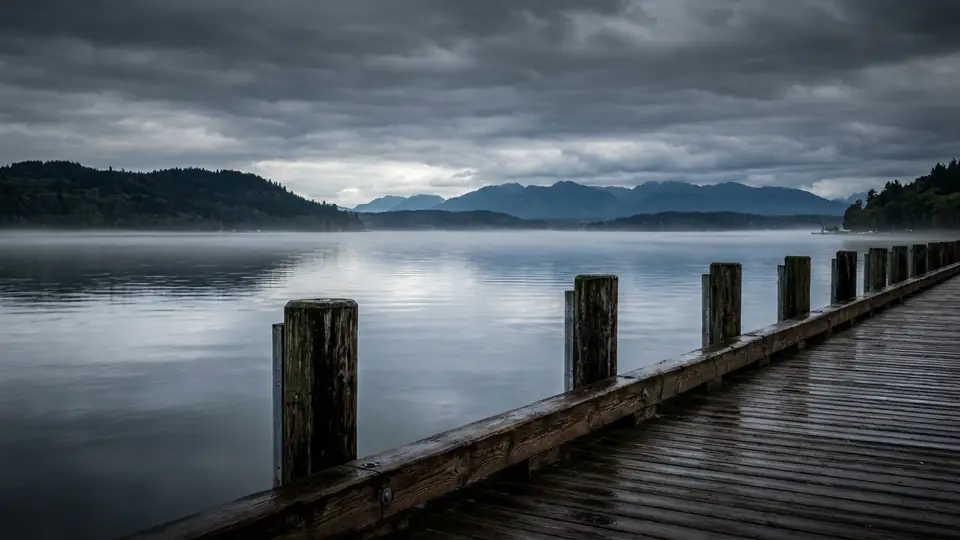
The sky has already made its decision by the time you cross the bridge. It is low and pewter and close, the kind of sky that presses a city into its own reflection. Below you, Lake Union is a sheet of hammered silver.
You have been to Seattle before. You did Pike Place in the rain. You ate chowder from a paper cup and watched them throw the fish and took the photo everyone takes. You walked Capitol Hill until your feet hurt and drank coffee at three places, each one claiming to be the definitive one. You had a good time. You also had a Google Doc with fourteen entries and a creeping sense, by Sunday morning, that you had been performing a trip instead of taking one.
This time you came back with your partner and one rule: the room comes first. Most couples who make this decision book downtown. Hotel 1000, maybe, or one of the glass towers near the waterfront. Close to Pike Place, close to everything, the safe answer. There is nothing wrong with the safe answer. But Seattle is a city that rewards going further out, especially when you are planning to stay in. The neighborhoods beyond downtown have a gravity that the city center, for all its convenience, does not. A room on Lake Union feels different from a room in Ballard. The view from the window changes what the tub feels like. The walk outside changes what the return feels like.
Weekend One: Lake Union
Friday Evening: Check In, Heat On, Water Outside
Silver Cloud Hotel sits on the southern shore of Lake Union in a way that feels accidental, as if someone built a warm living room and then noticed it was next to a body of water. You check in and the lobby is quiet. Not hushed, not formal. Quiet the way a weekday library is quiet. People are here, but nobody is performing anything.
The warmth hits you first, before the view, before the bed, before the tub. The heat is already on. The fireplace is lit or ready to be lit. The transition from the grey outside to this interior warmth happens in the space of a single breath. Then you see the lake.
It is right there. Not across a parking lot, not beyond a balcony railing and a strip of landscaping. The water is close enough that the seaplanes taxiing to the dock feel like they are arriving at your building. The light at this hour, in November, is the color of wet stone. The lake holds it and gives it back, doubled.
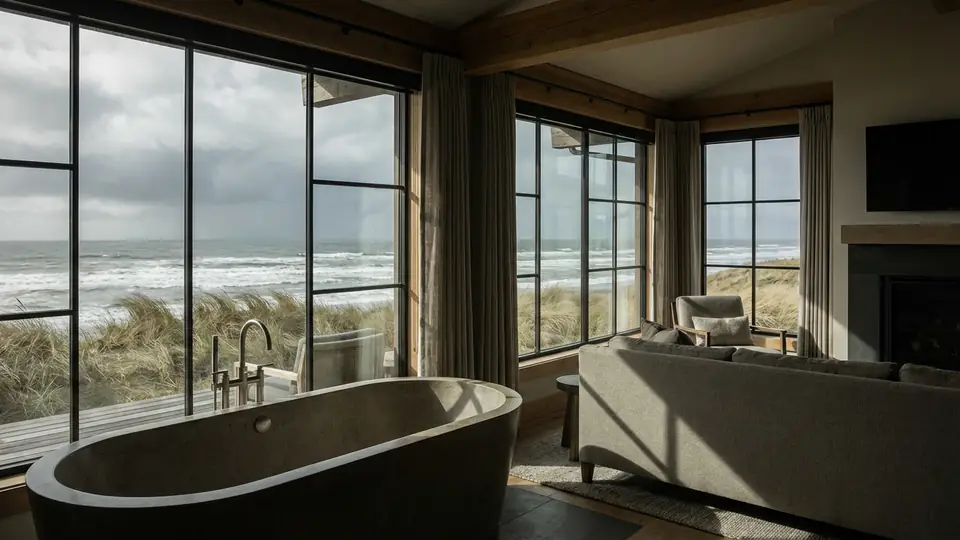
The jetted tub is by the window. Not in the bathroom, sealed off behind a door and a ventilation fan. In the room, facing the water, next to the fireplace. You understand, standing there with your bag still on your shoulder, that this is the architecture of permission. The room has been arranged so that the most comfortable thing you can do is also the thing with the best view. There is no reason to leave.
You do not. You fill the tub. The jets come on and the surface churns. Steam rises and meets the cold glass of the window. For a few minutes you cannot see the lake at all. Then the glass clears in streaks. The seaplanes are gone for the night. The water outside is darker now, and the water you are sitting in is hot. Your partner is on the bed reading something on their phone. The fireplace is doing its single, patient job. You are in Seattle, and you are not going anywhere tonight.
Room service, if you want it. A bottle of wine from the lobby shop. Or nothing at all. Friday night on Lake Union asks nothing of you, which is the whole point.
Saturday Morning: Fog, Coffee, Shoreline Walk
You wake up to fog. The lake has disappeared. The window, which last night framed seaplanes and city lights reflected on black water, now shows a white wall of nothing. Somewhere out there, a boat engine is idling. The sound carries across the water in that strange amplified way that fog produces. The world has gotten smaller overnight.
You sit by the window with a ceramic cup and watch the fog do what Seattle fog does. It lifts in stages, revealing the lake in horizontal strips. First the near shore. Then a dock. Then, twenty minutes later, the houseboats on the far side, their lights still on. It is 8:30 in the morning and you have done nothing. The nothing has been so absorbing that you forgot to check the time.
Later, maybe, a walk. The shoreline path winds south toward the Center for Wooden Boats, a small museum where restored sailboats and dinghies float in an indoor lagoon. It takes thirty minutes if you are passing through and two hours if you are not in a hurry. You are not in a hurry. The boats are beautiful. The volunteers who restore them will talk to you about hull construction with a sincerity that makes you feel like you have stumbled into someone's life's work. You have.
Then back. The walk is short. The hotel appears through the trees and you feel something you did not expect: relief. Not the relief of returning to shelter, though Seattle's drizzle is persistent. The relief of having a place that feels like yours. A temporary home you chose for the window. For the tub. For the way the lake light enters the room and shifts color every hour.
Saturday Evening: City Lights Across The Water
The tub is full again. The fireplace is on again. But now the lake is dark, and the city has turned on, and the lights from the opposite shore lay themselves across the water in long, trembling columns. A float plane dock is lit with a single amber light. Beyond it, the I-5 bridge is a ribbon of moving headlights, close enough to see, far enough to be silent.
You are in the water. The water is very warm. The world outside the window is cold and moving, and you are still. This is what Lake Union gives you that downtown cannot: the feeling of being at the edge of a city without leaving it. The urban hum is there, across the water, but it belongs to someone else. Your evening is this room, this steam, this view that shifts every time a cloud moves across the reflected lights.
Your partner says something from the bed about dinner. You could go out. South Lake Union has restaurants. But going out means leaving this, and this, right now, is the best version of your weekend. You stay.
Weekend Two: Ballard
Same city. Same low sky. Same Friday arrival. But a different room, in a different part of the city, and the weekend reshapes itself from the first hour.
Friday Evening: Ballard Avenue Outside The Window
Hotel Ballard is on Ballard Avenue, which is the kind of street that other neighborhoods try to manufacture and never quite pull off. Former brick warehouses with arched windows. Restaurants with handwritten menus in the glass. A bar where the door is propped open even in November because someone inside is laughing loud enough to warm the sidewalk.
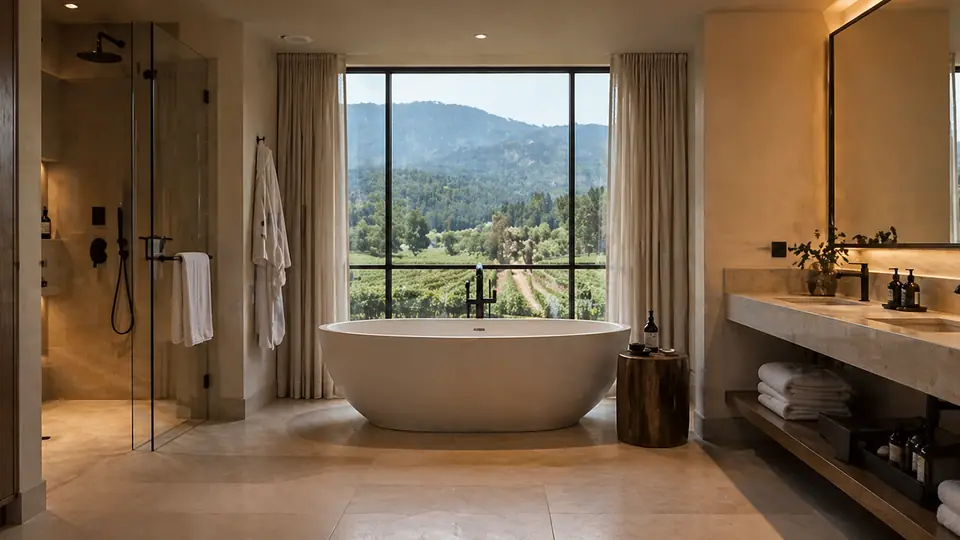
The room is generous. Large bed, clean lines, a freestanding tub that sits in the room like a piece of furniture, which is what it is. There are no lake views here. The window faces the avenue, and the avenue, on a Friday evening, is alive. You can hear the neighborhood from the tub. Not loudly, not intrusively. The way you hear a party in the next apartment: enough to know that something is happening, not enough to feel excluded from what you are doing instead.
You fill the tub. The water runs hot and fast. Your partner is standing at the window, watching two women in rain jackets cross the street toward a wine bar. The room fills with steam. Ballard Avenue fills with Friday. You are in both places at once.
Saturday Daytime: Locks, Shops, The Pull Back To The Tub
Ballard earns its morning. The farmers market sets up on Sunday, not Saturday, so today belongs to the neighborhood at its unhurried pace. A walk through the Hiram M. Chittenden Locks, where Lake Union's fresh water meets Puget Sound's salt water through a system of concrete chambers. They look like something from a previous century. They are. Boats rise and fall. Salmon, in season, climb a fish ladder beside the locks while tourists press their faces to the underwater viewing windows. It is odd and specific and impossible to experience anywhere else.
You walk longer than you planned. Ballard invites this. The side streets have bookstores and plant shops and a bakery with a line out the door that moves faster than you would expect. You buy a loaf of something with olives in it. Your partner finds a candle that smells like cedar and rain, which is redundant in Seattle, but they buy it anyway.
By mid-afternoon, your feet are wet and your hands are cold. Hotel Ballard, four blocks away, is pulling you back with a force that feels gravitational. The freestanding tub is what you are thinking about. Not as a luxury. As a destination. The place where the afternoon becomes the evening, where the chill in your fingers gives way to heat. The walk you just took becomes the reason the stillness feels so good.
Saturday Evening: Dinner Three Blocks Away
Dinner is at a restaurant on Ballard Avenue. It has small plates and natural wine and a bar where the bartender remembers what you ordered last time, even though there was no last time. The food is careful without being fussy. Roasted carrots with something fermented. A fish dish that tastes like the Sound. Bread with salted butter that you eat too much of, because the bread is that good.
The walk home is three blocks. It is raining, as it has been raining, as it will be raining. But the rain feels different now. It is not an obstacle. It is the last texture of the day. It makes the door of the hotel feel like an entrance to something private. Wet coats on the hook. Shoes by the heater. The tub is running before you have taken off your scarf.
You are in the tub. Your partner is in the tub. The street is still humming with the last of Saturday night. The muffled bass of the bar three doors down comes through the glass. The radiator ticks as it warms. You went out. You came back. Three blocks and a rainstorm between the two.
Sunday Morning: What Both Weekends Share
Fog sits on the water, whether it is Lake Union outside your window or the Ballard canal. The view is the same: white air, the suggestion of boats, the slow reveal of a city that takes its time waking up. Seattle is made of water, every version of it. Rain, fog, lake, sound. The condensation on a window. The steam rising from a cup. The heat still holding in a tub you filled twenty minutes ago. You have not drained it. The warmth is the last thing you want to let go of.
You are standing barefoot on hotel carpet, holding coffee in both hands. Your partner is still in bed, or in the shower, or sitting on the edge of the tub trailing their fingers through water that has cooled just enough to notice. The weekend is over. You did not see the Space Needle. You did not go to Pike Place. You did not eat at the restaurant your coworker recommended or visit the bookstore from that article you saved. You did three things, maybe four, and one of them was filling a bathtub twice.
You do not care. The Google Doc with twelve restaurants is still on your phone. You will delete it on the flight home, or you will not. It does not matter. You came to Seattle to stay in a room. Whichever you chose, the center held.
The fog lifts another inch. The city appears. You already know which room is yours.