
We Had It Backwards
We had been to Chicago three times. We knew the drill. Fly into O'Hare. Cab to whatever hotel was closest to the L, drop our bags, and start doing. Architecture boat tour on the river. Deep dish somewhere we had read about. A walk through Millennium Park where we took the same photo of the Bean that fourteen million other people took that year. Chicago was a city you did, and we did it efficiently.
The room was the last thing we booked and the first thing we forgot. A bed, a bathroom, a window that looked at another window. We fell in at midnight and left by eight, and the room existed only as the gap between days.
On our fourth trip, we booked the room first. Not because someone told us to. Because we had been scrolling late one night and saw a photo of a freestanding tub in front of a wall of glass, the Chicago River below it, green and slow, and one of us said, "What if that was the whole weekend?" The other one opened the booking page.
We know the Viceroy exists. Rooftop pool, the Mile at your feet, the obvious choice for a nice Chicago weekend. We did not book it. Not because it is wrong. Because we wanted to test something less obvious. Three stays, three different ideas about what a room could do to a weekend. The city did not get smaller when we stayed in. It got sharper.
The River, Held at a Distance
The Langham sits at 330 North Wabash, where the river bends and the city opens up. We checked in on a Friday in early November. The lobby was marble and quiet. The woman at the desk knew our names before we said them, which is a small thing that changes the temperature of an arrival.
The room was on the fourteenth floor. We dropped our bags and did not speak for a minute, because the window was doing the talking. Floor-to-ceiling glass, and beyond it the river. That particular Chicago green that is not natural and not artificial. Just the river being the river with the buildings looking down into it. The freestanding tub sat five feet from the glass, round and white and absurdly inviting. Behind us, a fireplace we had not expected. A real one, or close enough that we did not care.
We filled the tub at four in the afternoon. Four p.m. on a Friday in Chicago and we were in water, watching a river barge crawl beneath us, the skyline going gold as the light shifted. We had planned to walk the Riverwalk. We had talked about dinner at a place on Randolph. Instead, we ordered room service and watched the light leave the buildings in stages, the glass towers going dark floor by floor until the river was the brightest thing.
The fireplace made the room smell like the kind of weekend we had been trying to have for years. Pine, maybe, or oak; we did not ask. We lay on a bed that felt like it had been made by someone who cared about sleep as a practice, not a commodity. We talked about nothing. The kind of nothing you only talk about when there is nowhere to be.
We ate at the Capitol Grille downstairs without changing out of the hotel robes. The Langham made us feel like this was normal. The steak was excellent but beside the point. The point was that we were still inside the building, still in the orbit of the room, and the city was right there through the restaurant windows. Right there and completely optional.
That night, we filled the tub again. The river at night is a different animal. The green goes black and the buildings throw light onto the water in long, broken columns. We sat in the heat and watched a water taxi cross below us, its wake scattering the reflections. Neither of us said "we should go out." We had stopped performing Chicago. For the first time in four trips, we were just in it.
The only thing that is not negotiable is the water and the door that locks and the person we brought with us.
North, Into the Neighborhood
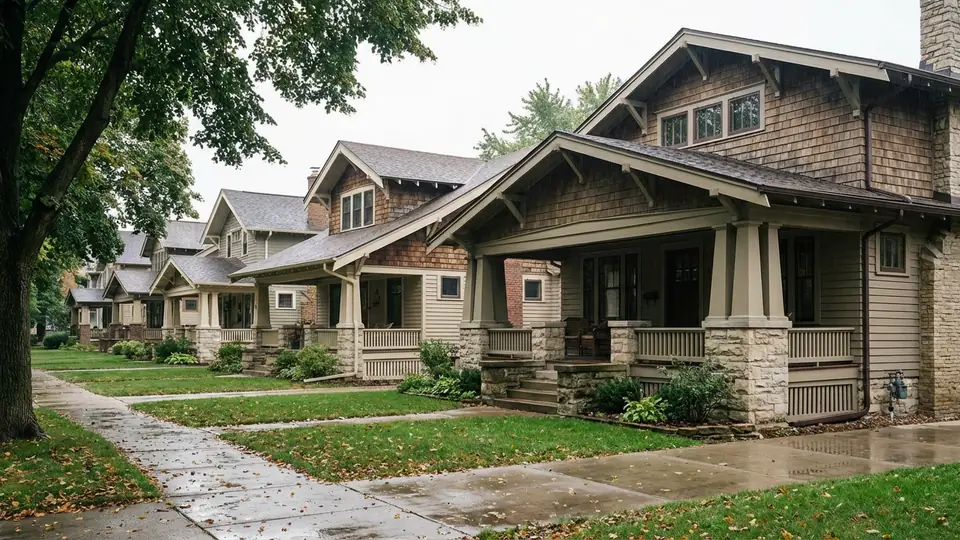
The cab from the Langham to Lincoln Park takes twelve minutes if the lights cooperate. We took it on a Saturday. The city changes fast. Glass and steel and river give way to brownstones, then to tree-lined streets where the buildings drop to three stories and the sky opens up. By the time we crossed Armitage, downtown felt like a place we had read about.
Lincoln Park is the Chicago that does not make the travel posters. No skyline. No Bean. Just neighborhoods that have been arguing about the best taqueria for forty years and streets where people walk dogs that cost more than our first car. It is the kind of place where we could live. A different feeling from the kind of place we could visit. The hotels here know it.
Villa D' Citta is on a residential street, and we almost walked past it. No marquee, no doorman, no indication from the outside that this was anything other than a very nice house owned by someone with very good taste. The door was unlocked. The entryway was marble and walnut and smelled like fresh flowers that had not been arranged by a corporate florist.
Our room was on the second floor. Smaller than The Langham, and not trying to compete. The bed was iron-framed. The walls were plaster, not drywall, and we could feel the difference when we touched them. Oil paintings in heavy frames. We did not check if they were original. The room had the character of a place that had been furnished by a person, not a design firm.
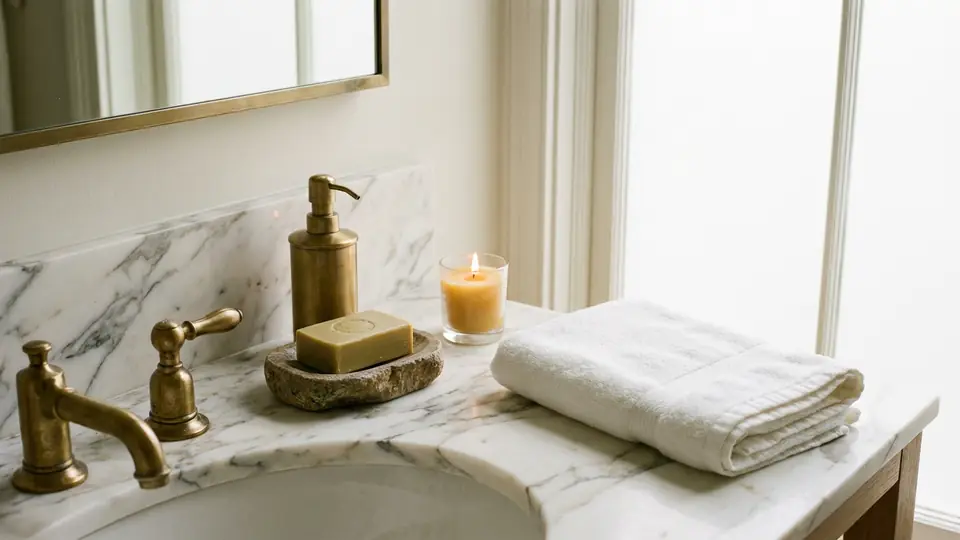
The tub was in the bathroom. Not staged in front of a window, not positioned for a photograph. Just a deep, claw-footed tub in a tiled bathroom with good light and a lock on the door. This sounds less dramatic than the Langham's river-view setup, and it was. That was the point. At The Langham, the tub was a performance: the city as backdrop, the bath as an event. Here, the tub was private in the old-fashioned sense. Nobody was watching, not even metaphorically.
We walked to dinner. Halsted Street, ten minutes on foot. A small Italian place with paper on the tables and a wine list that fit on one side of a card. We split a carafe of Montepulciano and a plate of cacio e pepe that was better than anything we had eaten downtown.
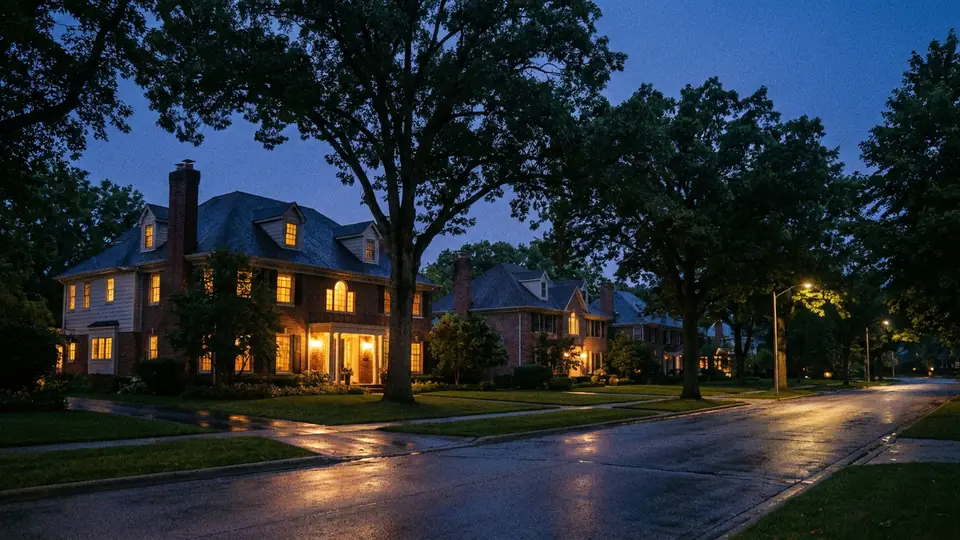
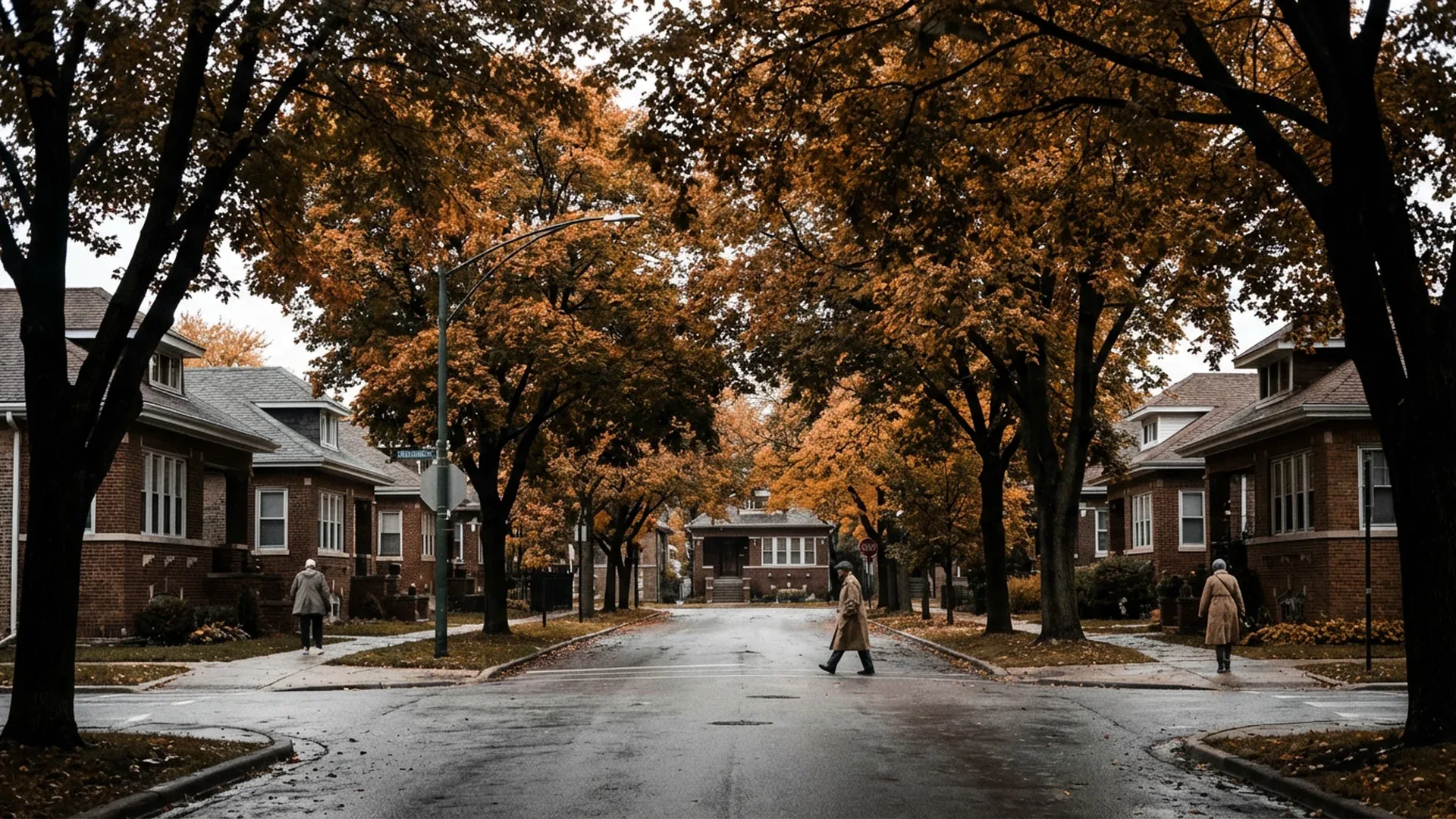
The walk back was the thing. November in Lincoln Park at nine p.m., the cold just sharp enough to make us walk a little closer together. Leaves still on some trees, lit from below by porch lights. We could hear music from somewhere, a piano, and we stopped on the sidewalk to listen. Nobody was performing for us. The neighborhood was just being itself.
Back in the room, we ran the bath. No view of the river, no skyline shifting from gold to black. Just hot water and old tile and the sound of the house settling around us. One of us read. The other slept. This was not luxury the way The Langham was luxury. This was comfort that had been lived in, and it felt, for reasons we could not entirely explain, more like ours.
The Drive Nobody Expects
We almost did not go to Northbrook. We had found it online, the way we find everything: late at night, past the reputable results, in the territory where the listings get weird. "Private swimming pool in every suite. Adults only." The photos looked like they had been taken in 1997. The address was off I-294, which is the expressway you take to get to the airport, not to get to a romantic weekend. One of us said, "This looks insane." The other said, "Book it."
The drive from Lincoln Park took thirty-five minutes. Up I-94, past Evanston, into the part of the suburbs where the architecture goes beige and the retail goes strip-mall. We passed a Home Depot. We passed a Jiffy Lube. We looked at each other with the expression couples use when one of them has made a decision that the other is tolerating.
The GPS said "you have arrived" in front of a building that looked like a conference center from the outside. Low-slung, anodyne, set back from a road with no sidewalks. The lobby was small and efficient. No restaurant. No bar. No pool shared with other guests, because there were no shared spaces at all. We got a key and we went to our room, and our room was the entire property.
The Room That Was Everything
The suite at Sybaris was larger than our apartment. We checked the floor plan later. The suite won. At the center of the room, behind floor-to-ceiling glass, was a swimming pool. Not a plunge pool. Not a soaking tub with pretensions. A swimming pool, blue and lit from below, with a hot tub built into its near end, steam rising off the surface.
We stood in the doorway for a long time.
The rest of the room organized itself around the water. A king bed facing the pool. A fireplace. A sitting area that nobody had ever used. The bathroom was an afterthought; the entire suite was a bathroom, in the best possible sense.
We swam at midnight in our room in a suburb off the interstate, and it was the single most memorable hour of our four trips to Chicago combined. The water was warm and the room was quiet and the only light came from the pool itself, blue and wavering on the ceiling. Through the glass, we could see a parking lot, and beyond it, trees. No skyline. No river. No Chicago at all.
And we did not miss it.
We had spent a weekend at The Langham watching the city through glass, admiring it, holding it at a romantic distance. We had spent a night at Villa D' Citta woven into a neighborhood, walking its streets, part of its rhythm. Both were revelations. Both changed what we thought a room could do. But Sybaris did something neither of them managed. It took the city away and nothing was missing. The skyline is a bonus. The neighborhood is a bonus. What is not negotiable is the water and the door that locks and the person we brought with us.
We floated on our backs and looked at the ceiling and talked about the kind of things we talk about when there is absolutely nothing else to do and nowhere else to be. We got out at two a.m. and slept the kind of sleep we sleep when our bodies are warm and our minds have been emptied of every plan.
What We Carry
We do not book the room last anymore.
It sounds like a small change, and it is. It takes thirty seconds to reverse the order of operations: instead of flights, then restaurants, then the hotel, we start with the hotel and let the rest fill in around it. But those thirty seconds have changed what our trips feel like. Not where we go or what we do; how we feel when we are doing it.
Chicago taught us this. Not the architecture, not the food, not the lakefront. Three rooms. A freestanding tub above a river. A claw-footed bath in a villa on a residential street. A swimming pool in a suburb we never would have found if we had not stopped planning and started looking.
Somewhere, right now, in a hotel we have not booked yet, a tub is filling. The water hits the porcelain and the sound is the same everywhere. A low, steady pour that is not selling anything. Just water, finding its level. We will find ours.