Ten Hotels Where the Tub Is the Point of the Trip
From a ridge in North Carolina to the Hotel Chelsea's marble floors. Ten rooms where the tub is the entire evening.
Ten standout jacuzzi hotels across the US, from Savannah inns to a Smoky Mountain balcony tub. The highest-rated is Hapey Memories in Pigeon Forge with a perfect 5.0 across 1,034 reviews.
There is no single best jacuzzi hotel in America. There is a freestanding tub in a building on West 23rd Street where Leonard Cohen once wrote songs, and there is an outdoor hot tub on a ridge in western North Carolina where the only sound at dusk is the Blue Ridge settling into itself. They are not competing. They are not comparable. They are both on this list because they do the same thing differently: they make the room the reason anyone comes.
Most hotel tubs are afterthoughts. These ten are not. Some face the landscape. Some are sealed against the city. Some are woven into the daily life of a small inn. All ten are worth the trip for the room alone.
The Landscape Bath. Where the tub faces the sky and the walls fall away.
No. 1Glade Mountain Top Retreat, Clyde, North Carolina
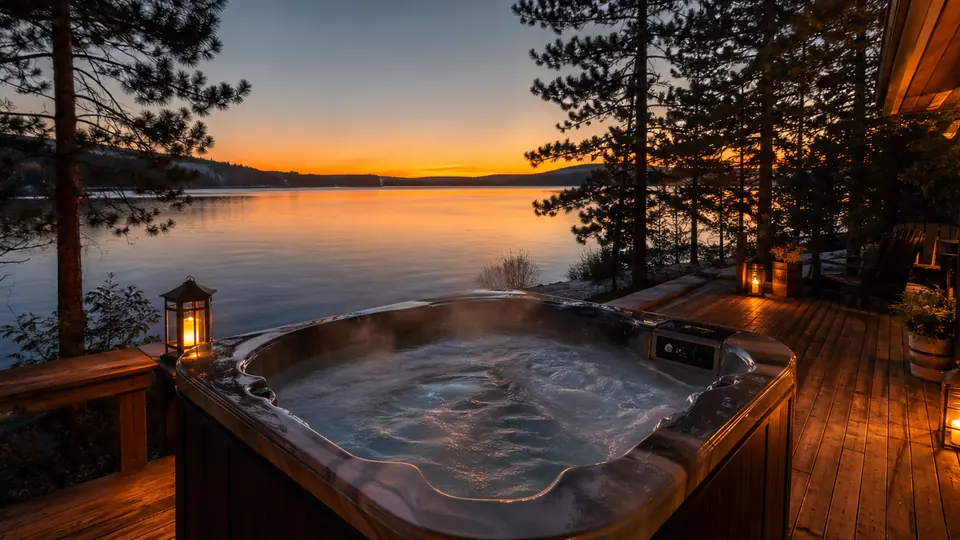
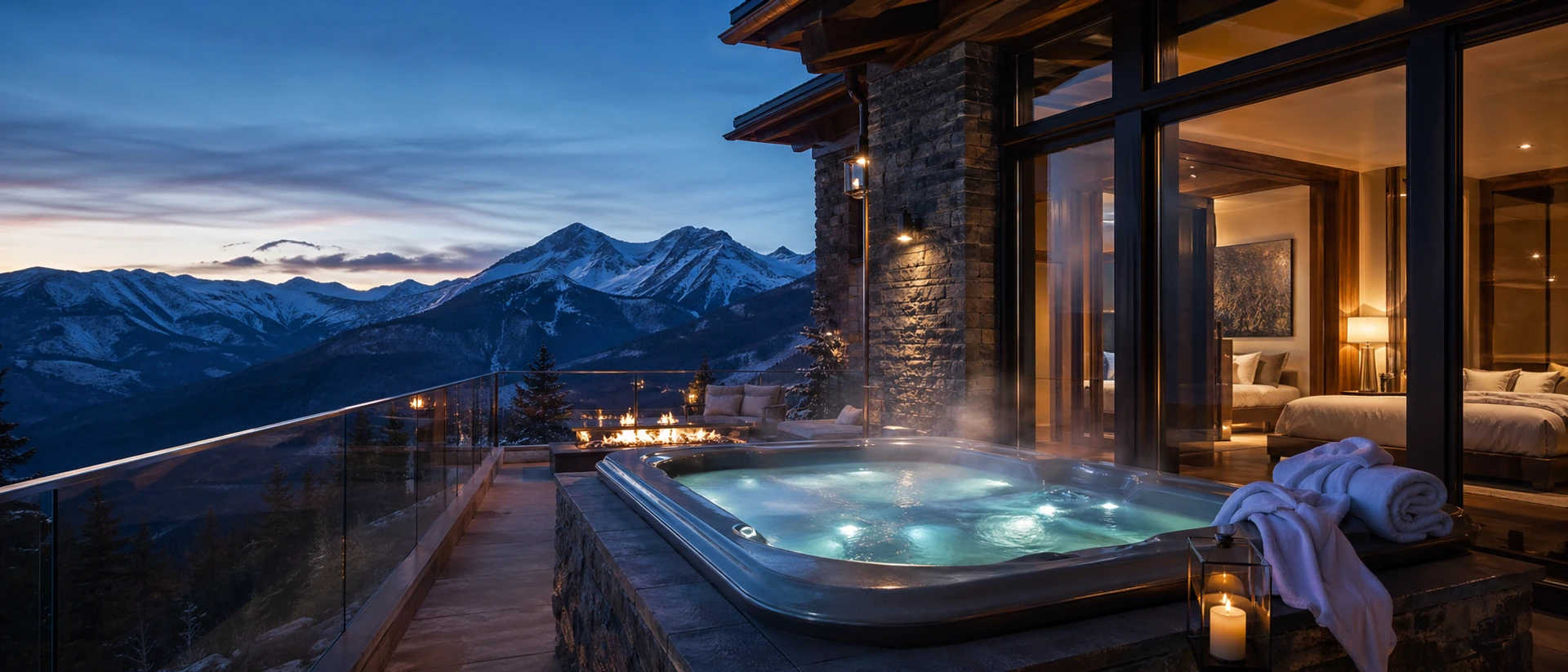
The hot tub sits on an open ridge above the Blue Ridge foothills, beside a fire pit and a koi pond, and there is no building between the water and the valley. Clyde is thirty minutes west of Asheville on roads that narrow as they climb. Glade Mountain Top is the kind of place that could only exist at this altitude: a cabin on a ridgeline where the bathing happens outdoors, in weather, with the Appalachian dusk doing whatever it wants to the light. The fire pit throws warmth from one side. The water holds it from below. The mountains provide the rest. It is less a hotel room with a view than the view itself, with a tub set inside it.
No. 2Hapey Memories, Pigeon Forge, Tennessee
Hapey Memories is a cabin on a Pigeon Forge mountainside, and the name is the only thing about it that does not hold up. The balcony at seven in the evening, the whirlpool running, the Great Smokies going blue-grey in every direction: that holds up fine. Two king suites, a private deck, no hallway, no lobby, no other guests. The balcony faces the ridgeline, not the strip, and the jetted tub is positioned so the water's surface catches the tree line. This is the Smokies trip where the cabin is the entire itinerary. Morning coffee on the deck, afternoon silence, evening soak with the mountains doing their slow color shift from green to violet. Three hours of driving for a deck and a ridgeline, and neither one asks anyone to leave.
No. 3Bavarian Lodge, Leavenworth, Washington
Leavenworth built itself as a Bavarian village in the 1960s to save its economy, and the remarkable thing is that it worked. The timber facades and flower boxes are real now, in the way that a costume worn long enough becomes the face. The Bavarian Lodge sits in the middle of it. The jacuzzi rooms have floor-to-ceiling windows that frame the Cascade Range like a painting nobody could afford. The jetted tub faces the glass. The mountains fill the glass. In winter, snow loads the peaks and the village below turns amber with string lights. In summer, the ridgeline is so green it looks backlit. The tub is warm in both seasons, and in both seasons the show outside the window plays to an audience of one.
The Urban Soak. Where the tub is a still point inside a city that never stops moving.
No. 4The Hotel Chelsea, New York
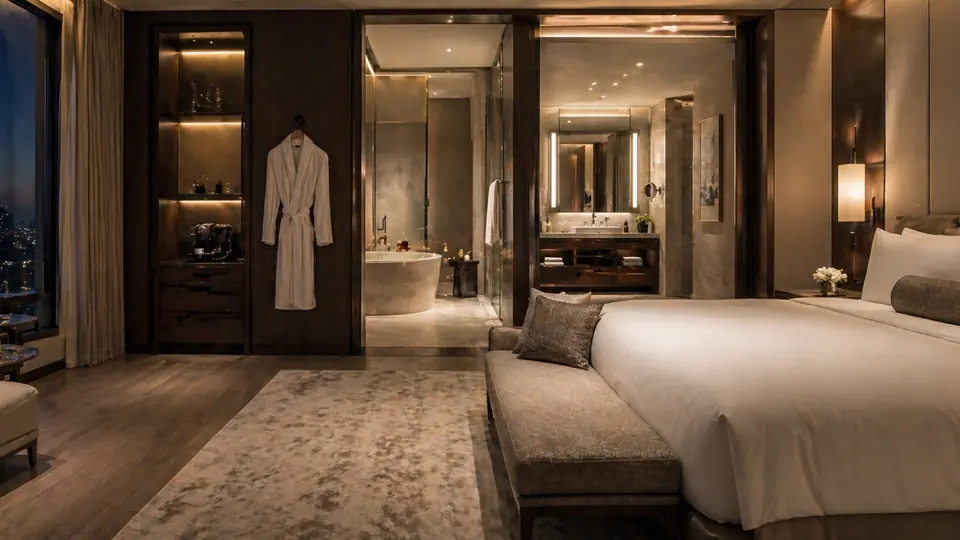
The Hotel Chelsea once housed Leonard Cohen, Patti Smith, Arthur Miller, and a rotating cast of poets, painters, and self-declared geniuses. The lobby smelled like oil paint and ambition. The renovation kept the bones. The rooms now have freestanding tubs, marble floors, and the particular amber light that old windows throw when the sun drops behind Tenth Avenue. The tub is modern. The iron staircase is not. The hallways still feel like they remember everyone who lived here, and they probably do. Two blocks south, the High Line is crowded with tourists photographing the Meatpacking District. The building has a longer memory than most museums, and the bath is warm enough to make the High Line irrelevant until morning.
No. 5Mandarin Oriental, Boston
The Mandarin Oriental does not surprise. It performs. Someone whose job is to consider surfaces has considered every one in the marble bathroom, and the freestanding tub is the centerpiece of that attention. The water temperature is right. The towels are the weight of a good winter coat. Boylston Street is outside, doing what Boylston Street does, and none of it penetrates. This is the bath as controlled environment, every variable accounted for, and the effect is not coldness but calm. The kind of calm that comes from knowing every detail between the guest and the hot water has been handled by someone who cared about it more than the guest would have.
No. 6Four Seasons Hotel Baltimore
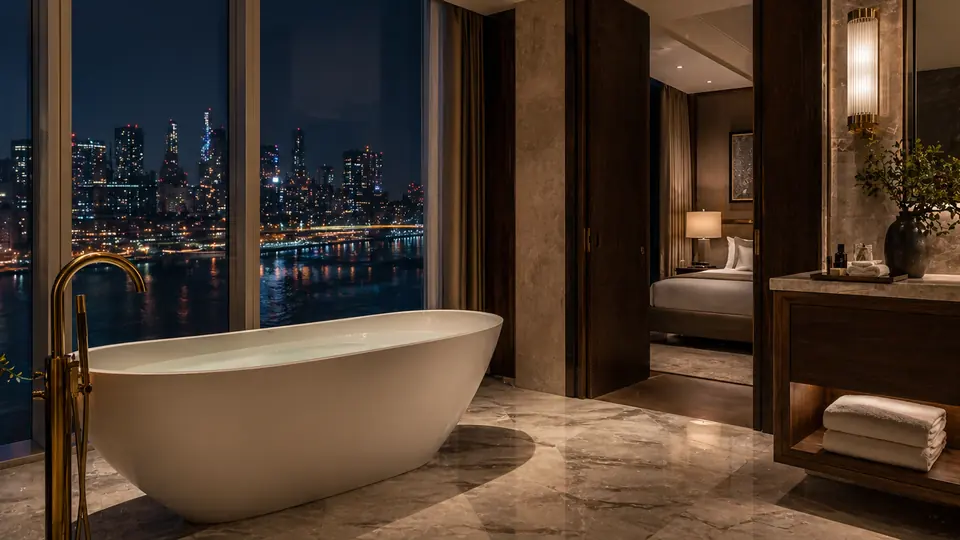
Harbor East sits at the edge of Baltimore's waterfront. The Four Seasons sits at the edge of Harbor East. And the freestanding tub in the upper-floor rooms faces a window that holds the entire Inner Harbor in its frame. The geometry is deliberate. The water in the tub is warm; the water in the harbor is grey-green and industrial and beautiful in the way that working waterfronts are beautiful from a distance. Federal Hill rises across the basin. The city does its thing. Baltimore looks better from warm water than from the street, and this specific room, this specific angle on the harbor, is a reason to reconsider the city entirely.
No. 7Inn San Francisco
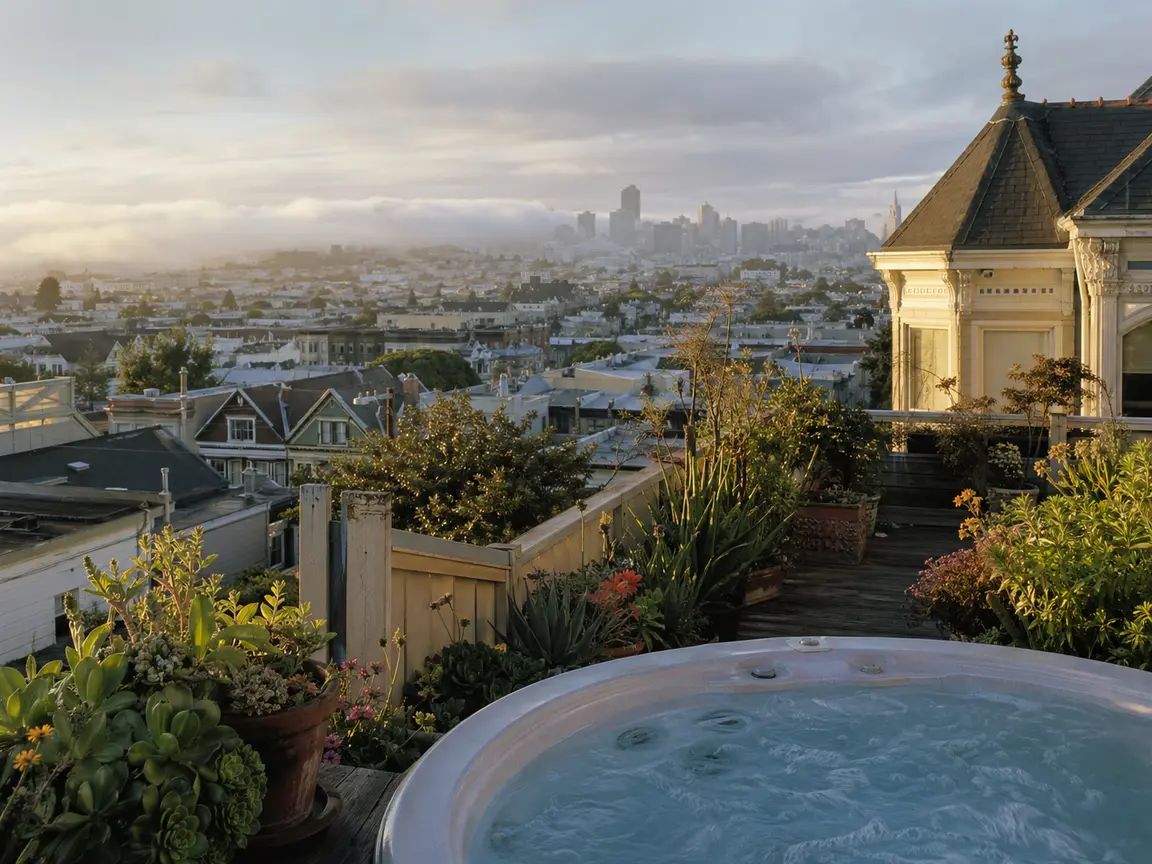
The Mission District is loud, opinionated, and covered in murals, and the Inn San Francisco is a Victorian house on South Van Ness that somehow holds its own against all of it. The building has the bones of a 19th-century residence: bay windows, crown molding, a staircase that creaks with intention. Upstairs, the whirlpool suite has a jetted tub and the kind of eclectic decor that happens when someone collects things they love instead of hiring a designer. Then there is the rooftop. A garden, up there, above the Mission, with the city below and the sky doing what San Francisco skies do, which is change every forty minutes. The most interesting soak in San Francisco is not in a tower hotel with a lobby bar. It is in a house with a garden on its roof and a personality that no chain could manufacture.
The Inn Bath. Where the tub is part of a rhythm the whole property keeps.
No. 8Justine Inn, Savannah
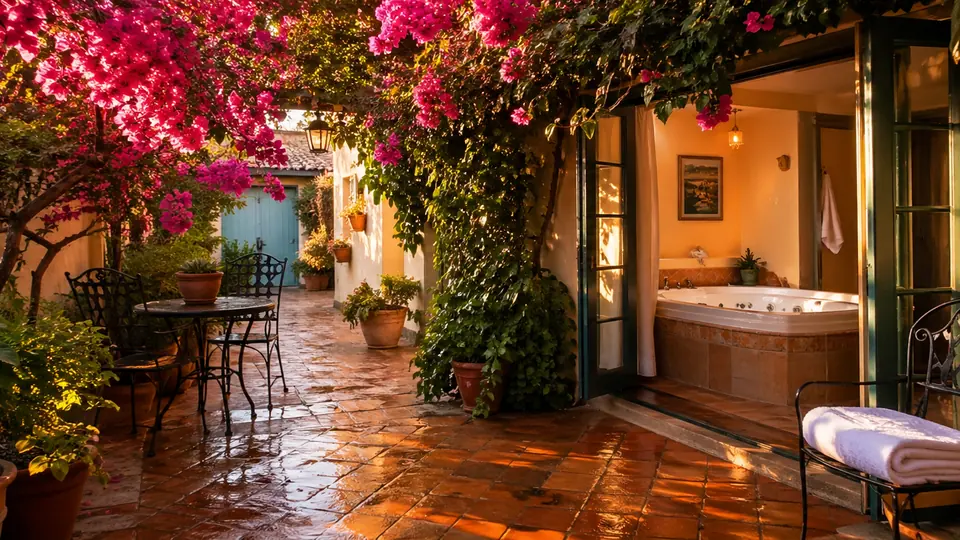
Chippewa Square is two blocks east and River Street is a ten-minute walk south, but the evening at the Justine Inn begins on the porch. Wine and cheese, set out by staff who know a guest's name by the second afternoon, in the particular light that Savannah produces at six o'clock: golden, thick, slow. Inside, the room has a freestanding clawfoot tub, the kind that looks like it has been here longer than the building. The tub is deep. The water is hot. The house is quiet except for the occasional creak of someone else's footsteps two floors up. Savannah has restaurants worth trying and squares worth seeing and a riverfront that glows after dark. All of that will be there tomorrow. Tonight, the clawfoot tub and the porch and the wine are a sequence the inn has perfected, and its guests are wise to follow it.
No. 9Abbey's Lantern Hill Inn, Ledyard, Connecticut
Foxwoods Resort Casino is six minutes by car, and the distance between the two properties is measured in something other than miles. Abbey's Lantern Hill is a forested inn with wood-accented rooms, an organic breakfast, and a freestanding soaking tub that faces a window full of eastern Connecticut hardwoods. The silence here is structural. No slot machines, no convention chatter, no elevator music. Oak and maple filter the light. The tub fills slowly, and there is nowhere to be while it fills. The morning after, the organic breakfast arrives and the woods outside the dining room are doing exactly what they were doing yesterday, which is nothing, gracefully.
No. 10Sage Hill Inn & Spa, Kyle, Texas
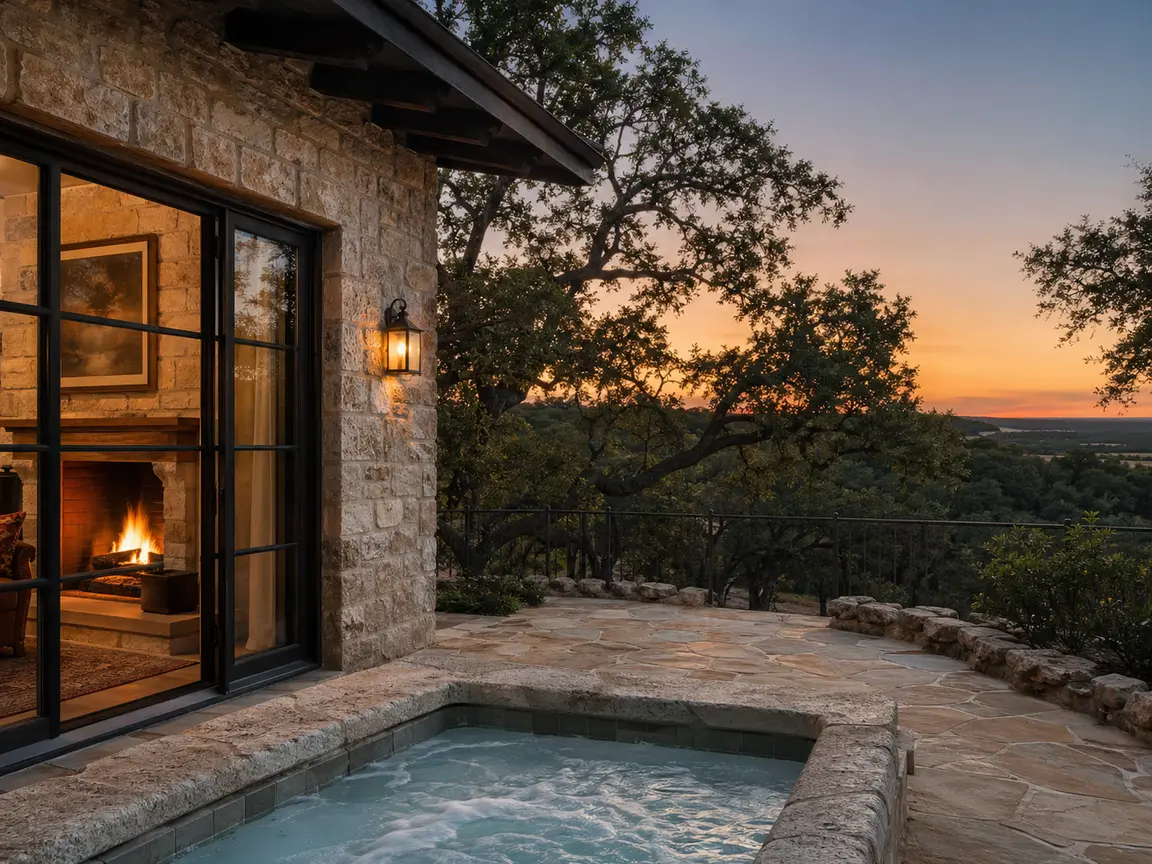
Kyle is twenty miles south of Austin on I-35, and Sage Hill is a hilltop property west of the interstate where the Texas Hill Country opens up and the city disappears. The casitas are private, each with a whirlpool tub and a fireplace, and the hilltop position means the views are long and empty in the way that only central Texas can be empty: live oaks, limestone, a sky that takes up more than its share of the frame. The spa is good. The dinners are good. The grounds are the kind of beautiful that does not announce itself. But the casita is where the evening lives. Door closed. Fireplace lit. Tub running. Austin is twenty miles north and irrelevant. The Hill Country is outside, doing nothing in particular, and the evening is doing the same.